
Every marketing leader knows the meeting. The CRO asks what pipeline marketing actually sourced, and the answer takes three tools, two analysts and a caveat. Web analytics say one thing, the CRM says another, the attribution tool says a third, and by the time the deck is built the number is both stale and disputed. Marketing spends as much energy defending its contribution as generating it.
The reason is structural: marketing's data and sales's data live in different systems, so the handoff from touch to revenue is a reconciliation, not a fact. Muntri puts the whole funnel on one record, which finally lets marketing prove its number instead of arguing it. Below is Verdine, a $250M-ARR software company, live.
You cannot attribute revenue to a touch when the touch and the revenue live in different databases. On one record, first touch to closed-won is a query, not a project.
01Every source to revenue, on one live screen
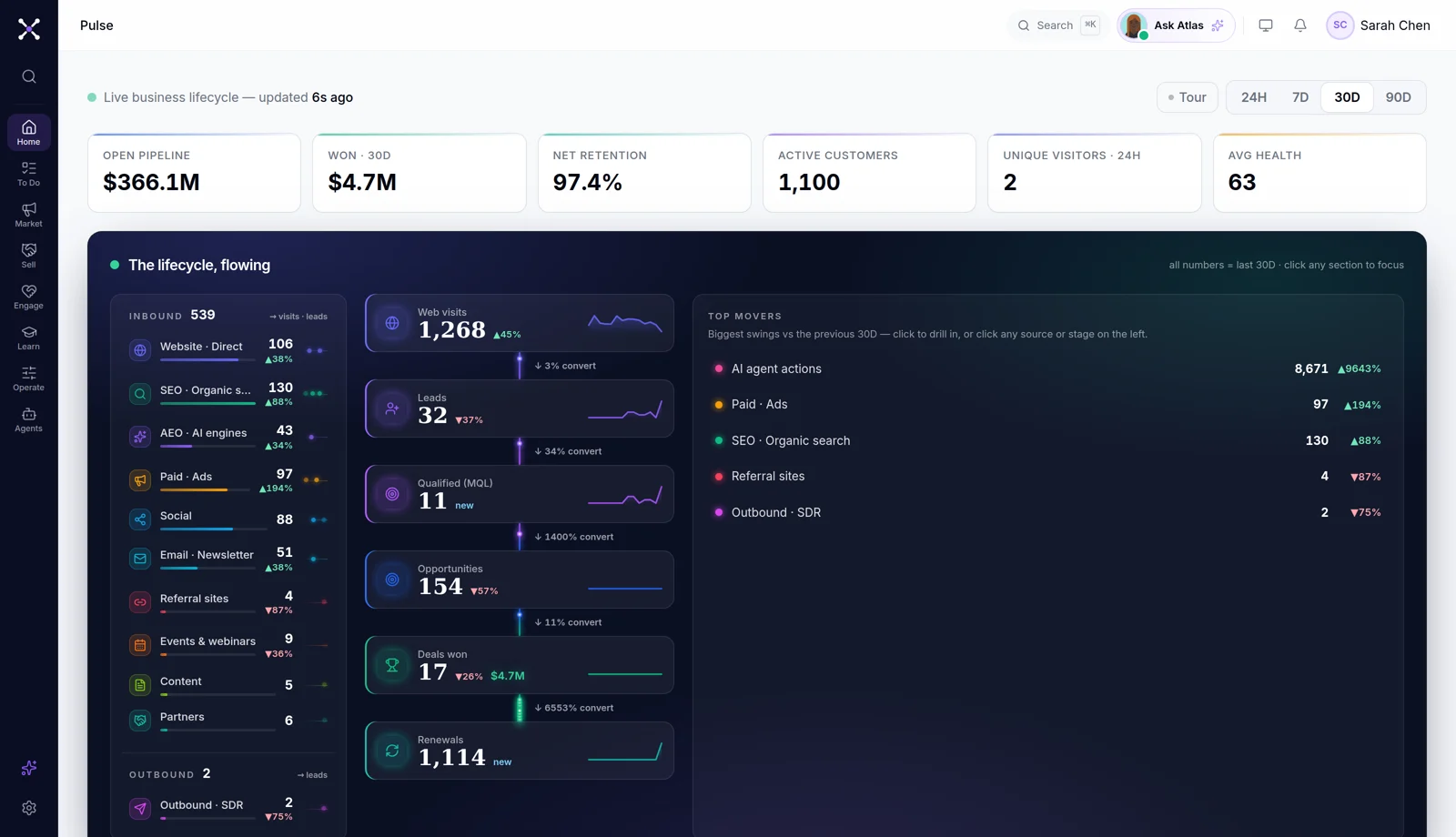
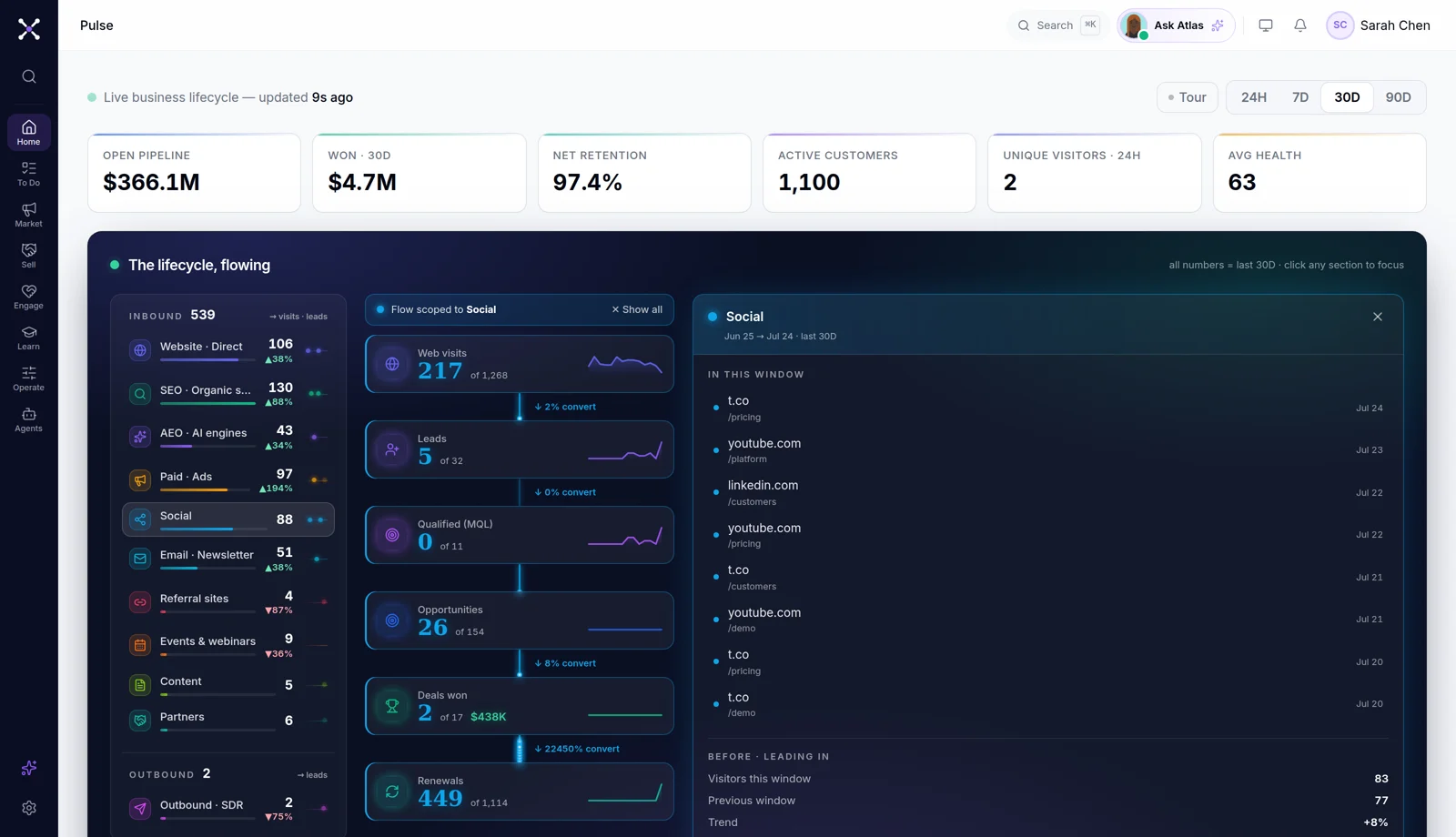
This is Pulse, the front page of the business. On the left, every source of demand. In the middle, the funnel itself: visits fall into leads, leads qualify, deals open, close and renew, with live conversion on every step. On the right, the biggest movers versus the previous period. Click any channel and the entire board re-scopes to it, from its visits all the way to its closed-won revenue and renewals. That is attribution from first touch to money, on one screen, with no BI project and no analyst.
02AI engines are a channel now, and Muntri counts them
Buyers increasingly arrive from AI answer engines: ChatGPT, Perplexity, Claude, Gemini. They research your category, get a recommendation, and show up already half-sold, and legacy CRMs do not even have a field for where they came from. Muntri measures AEO, answer-engine optimization, as a first-class channel, right beside organic, paid and social. When you scope Pulse to a channel you see its real cohort flow through every stage: how many visits, how many leads, how many opportunities, how much revenue. This is the attribution nobody else can give you, because attribution requires owning the whole path from visit to won, and marketing-only tools never do.
03Leads that arrive with their whole story
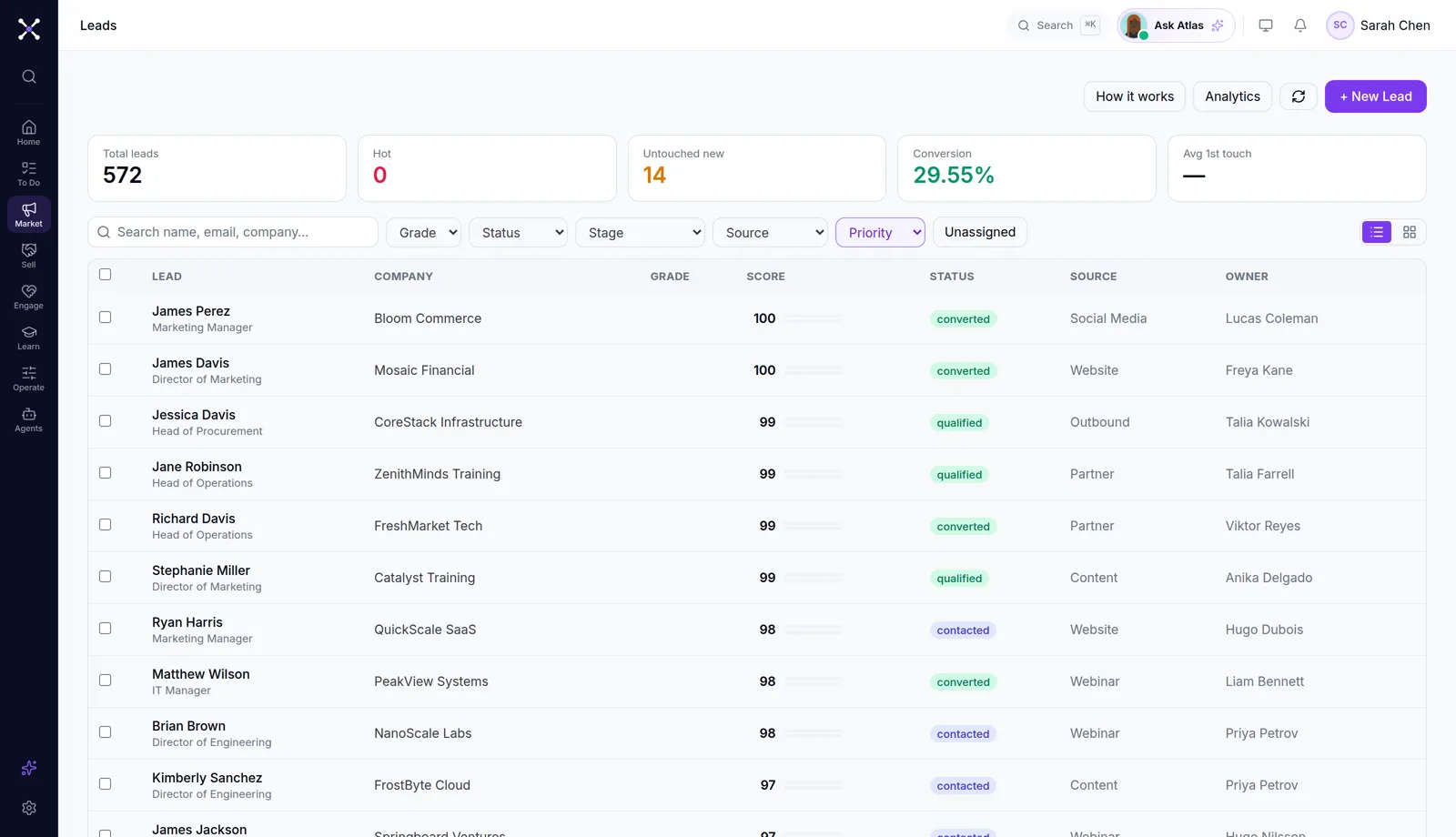
When a lead reaches sales, it does not arrive as a name and a form fill. It carries the pages the visitor read, the AI engine or campaign that referred them, the content they engaged, even product usage if they have touched the product. Scoring is explainable Fit and Intent, not a black-box number, with speed-to-lead SLAs and routing built in. Marketing hands sales a story, not a lead, so the two stop arguing about lead quality and start reading the same record.
04SDR agents extend the team without extending headcount
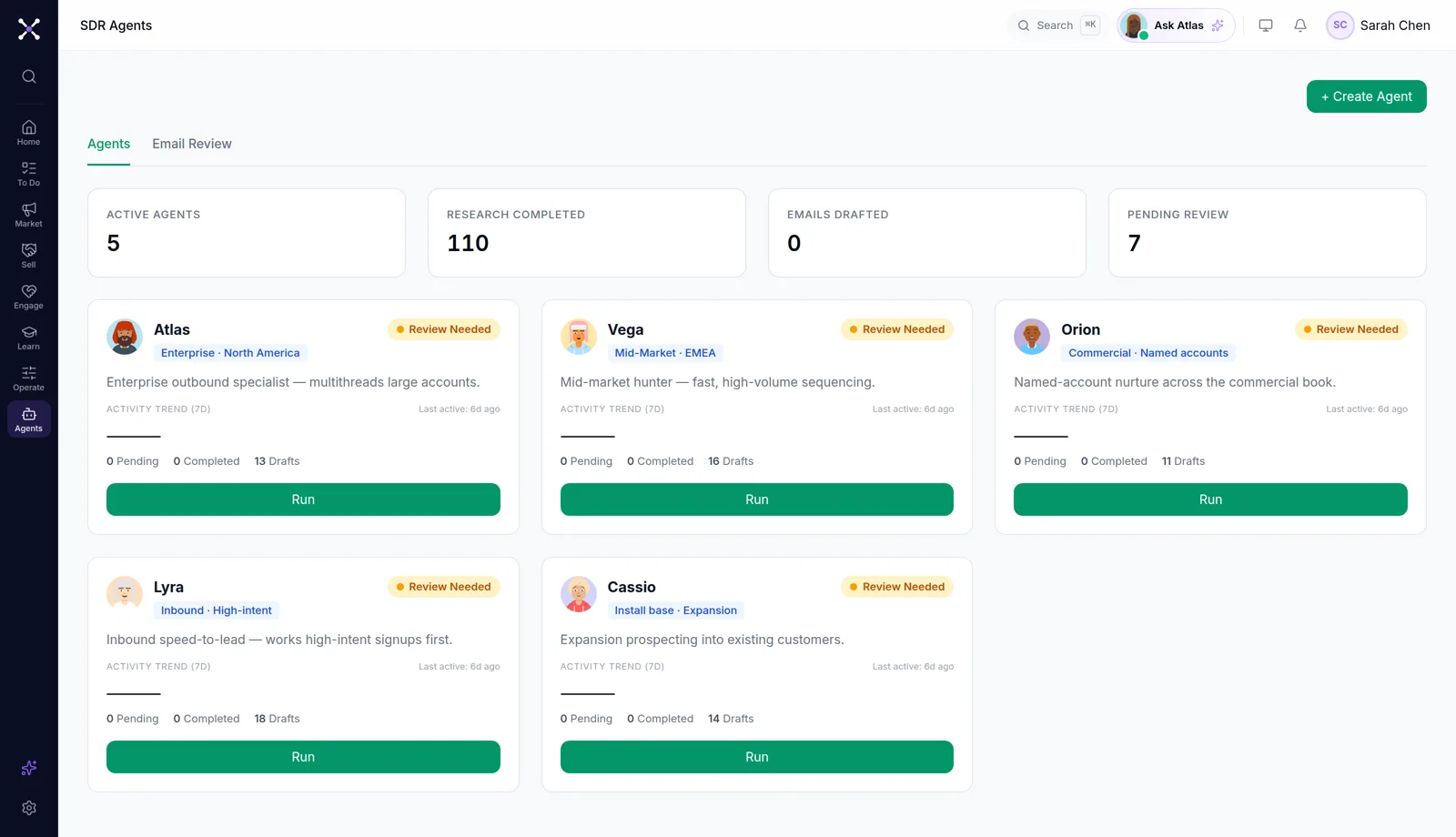
Demand generation does not stop at the form. A bench of named SDR agents researches accounts, drafts personalized outreach from that full first-party context, and queues every email for human review before it sends. They work the leads marketing generates with the context marketing captured, so the outbound follow-up is as informed as the inbound that earned it. More coverage, same headcount, and every draft is a human decision away from sending.
05What this means if you run marketing
You walk into the pipeline meeting with the number already proven, sources to revenue, live, no reconciliation. You see AI-engine demand as a channel while your competitors are still adding a field for it. You hand sales leads with a story instead of a lead with a caveat. And you extend the top of the funnel without adding heads. Marketing stops defending its contribution and starts compounding it.