Ask a CRO a simple question: what changed this week, and what should we do about it? Then watch what happens. Someone opens Salesforce for pipeline. Someone else opens Gong for what customers are actually saying, Gainsight for churn risk, Marketo for campaign touches, CaptivateIQ to check what the quarter means for comp, and a BI tool to stitch it all into a deck that is stale by the time it is presented. Six tools. Six logins. Six half-answers.
That stack was never a strategy. It accreted one point solution at a time, each solving a real gap the CRM couldn't, and each adding a seam where data, attribution and accountability quietly leak. The modern GTM stack now runs to 8 to 12 products, integrated just well enough to demo and just poorly enough to argue about every quarter-end.
We built Muntri on a different premise: the revenue cycle is one process. A visitor becomes a lead, the lead becomes a deal, the deal becomes a customer, and the customer renews and grows. So it should run on one record, with AI woven underneath every step rather than sold back to you as an add-on SKU.
And this is bigger than Muntri. AI is about to touch every step of revenue, but AI bolted onto a dozen disconnected systems doesn't heal the disconnection, it multiplies it: twelve copilots, each blind to what the other eleven know, each confidently wrong in its own silo. Intelligence only compounds when it sits on one integrated record, where every agent shares the same context and every action lands in the same place. Whether you build that yourself, buy it elsewhere, or buy it from us, it is the shape the winning revenue organization now takes.
The world is changing, and the direction is the same with Muntri or without it: fully integrated, with AI underneath. AI on top of a dozen systems is just a dozen more systems. That is the way now.
What follows is the argument, shown rather than told. Every frame below is the live product, running in a realistic working environment: Verdine, a 141-person, $250M-ARR B2B software company. Nothing is a mockup.
01Watch your whole business flow, live
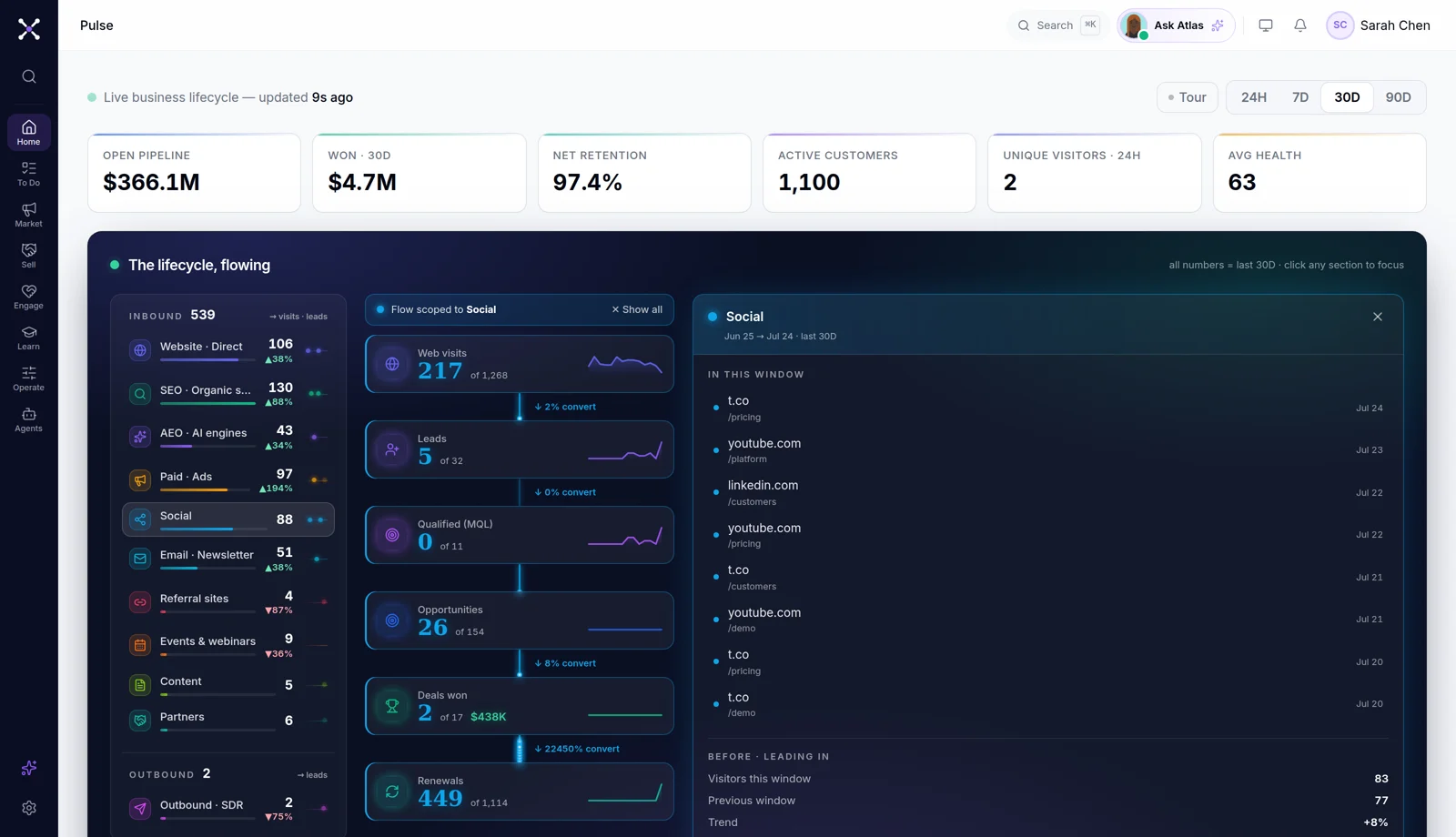
This is Pulse, the front page of Muntri. On the left sits every source of demand, including AI engines like ChatGPT and Perplexity. They send real buyers your way, and legacy CRMs don't even have a field for them. In the middle, the funnel itself: visits fall into leads, leads qualify, deals open, close and renew, with live conversion rates on every step. On the right, the biggest movers versus the previous period, ready to click.
Click any channel and the whole board re-scopes to it. Here's what that looks like for social: 217 of 1,268 visits, flowing through to 26 opportunities and 2 closed-won deals worth $632K. That is attribution from first touch to revenue, on one screen, with no BI project.
The question isn't whether your team works hard. It's whether anyone can see the whole engine at once. On a fragmented stack, nobody can.
02Mornings start with answers, not dashboards
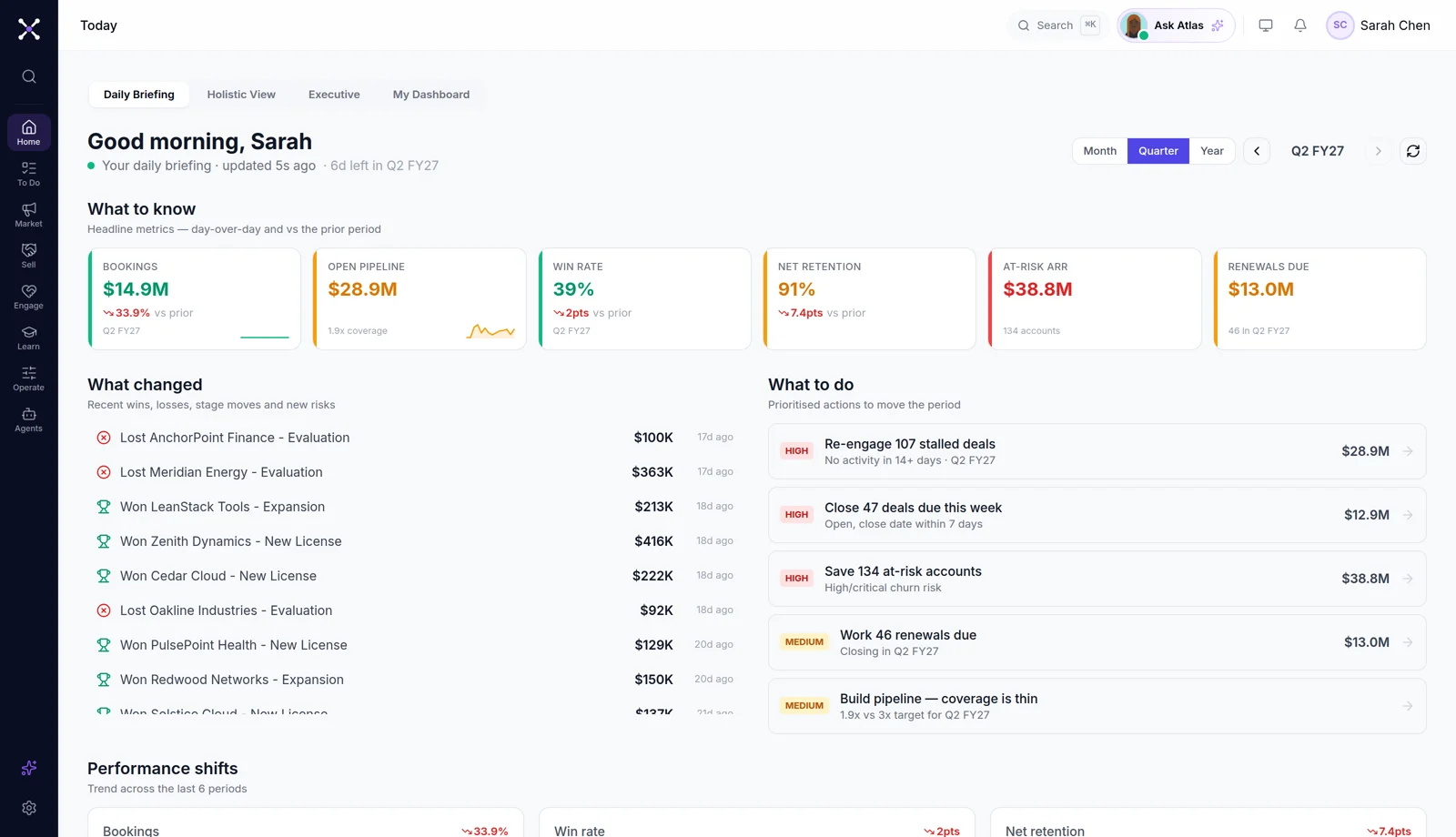
Dashboards make you do the work: open, filter, interpret, repeat. Muntri opens with a daily briefing instead. What to know, what changed, what to do, and every item carries a dollar figure with a one-click path to act. Below, Sarah, Verdine's CRO: $14.9M booked, 107 stalled deals worth $28.9M flagged for re-engagement, and 134 at-risk accounts worth $38.8M queued for saves. Her reps get the same page, scoped to their own book.
03Prospecting with the whole picture
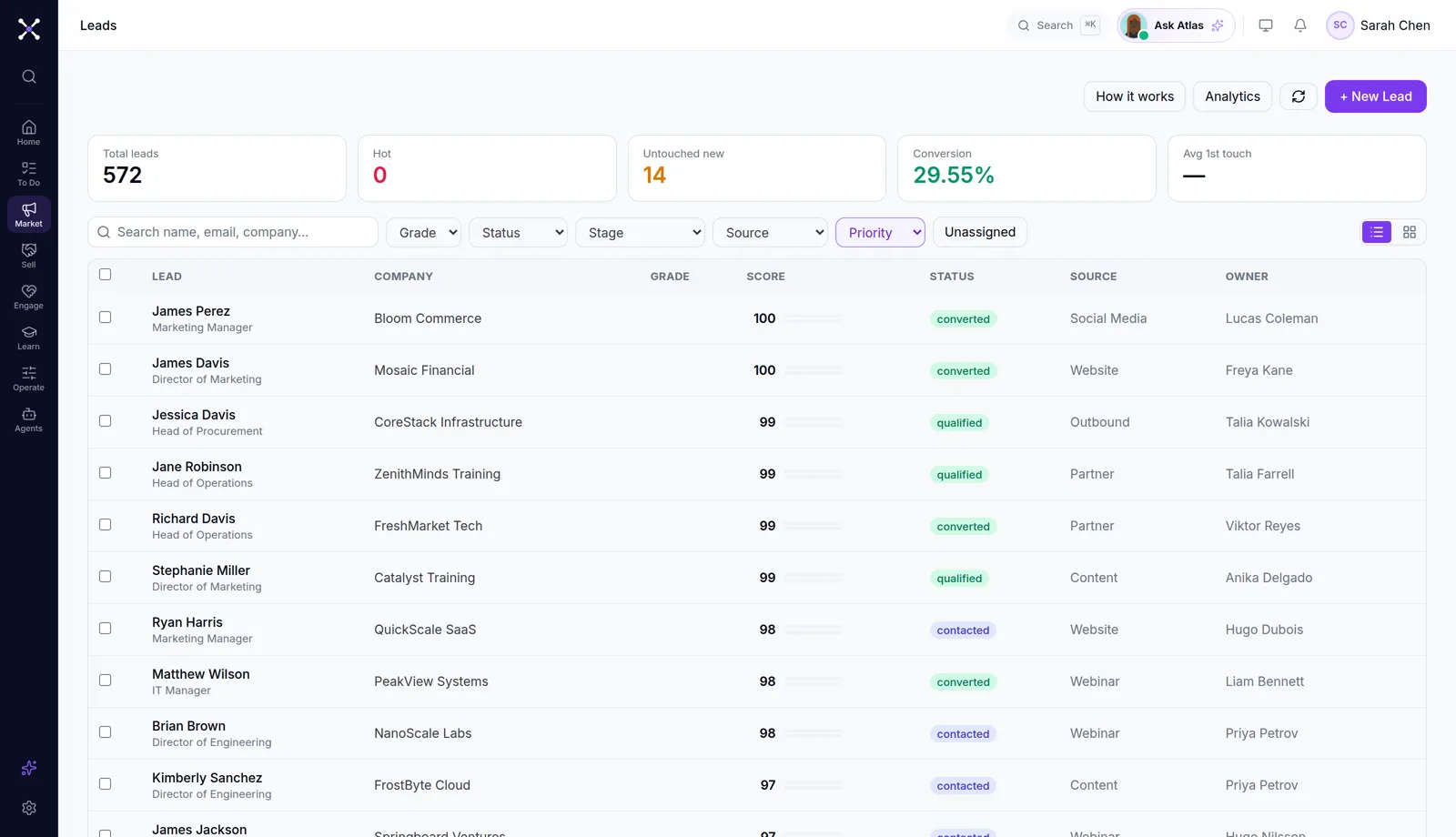
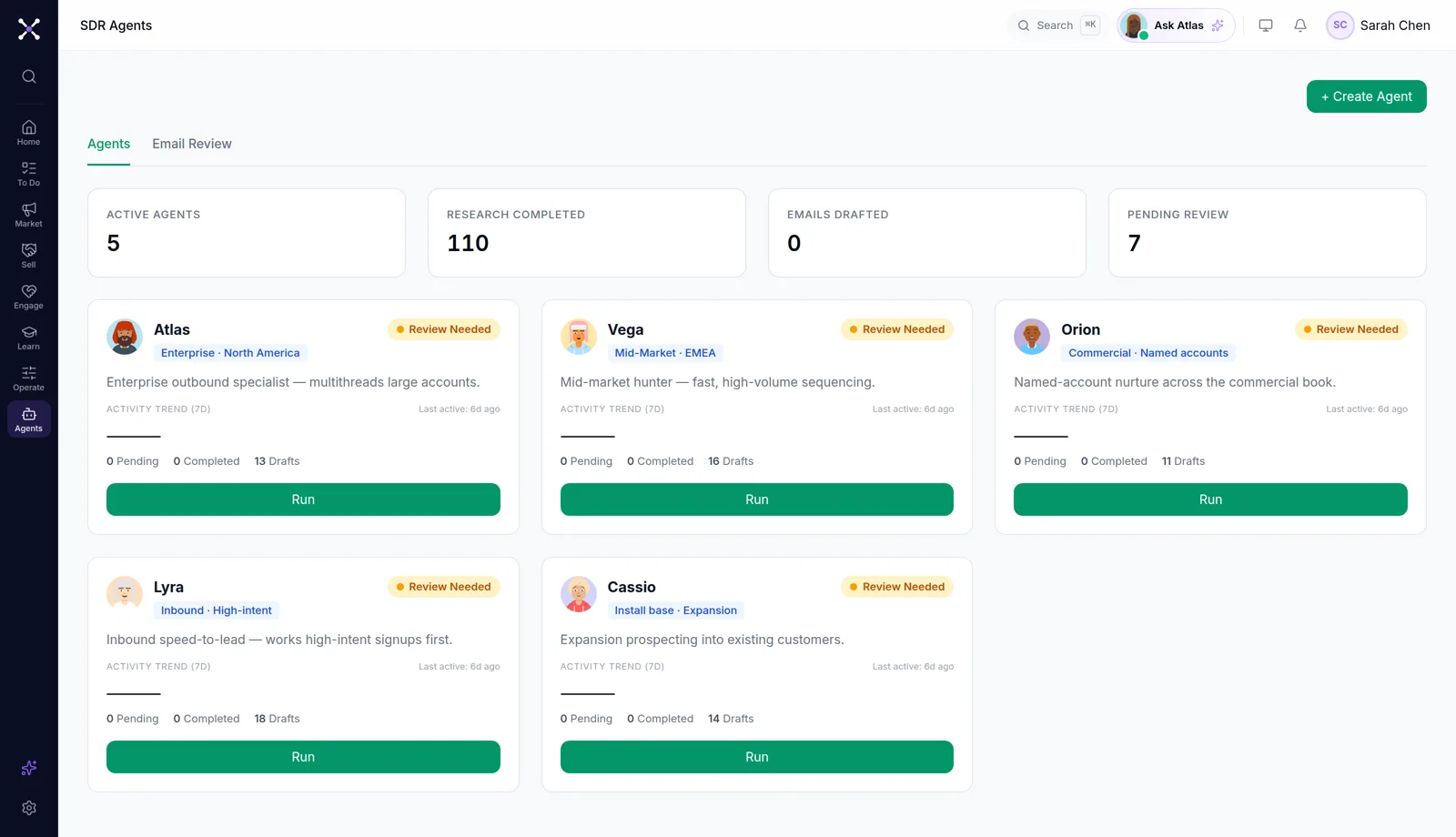
In a stack, inbound and outbound never meet. Web analytics live in one tool, sequences in another, intent data in a third, so an SDR works a name knowing almost nothing about it. In Muntri every door opens onto the same record: the pages a visitor read, the AI engine that referred them, the campaign touch, the form fill, the email reply, even product usage. Leads arrive already scored, with explainable Fit and Intent, speed-to-lead SLAs and routing. Outbound runs beside it: cadences, and a bench of named SDR agents that research accounts, draft outreach from that full context, and queue every email for human review before it sends.
04One deal, one record, from opportunity to signed contract
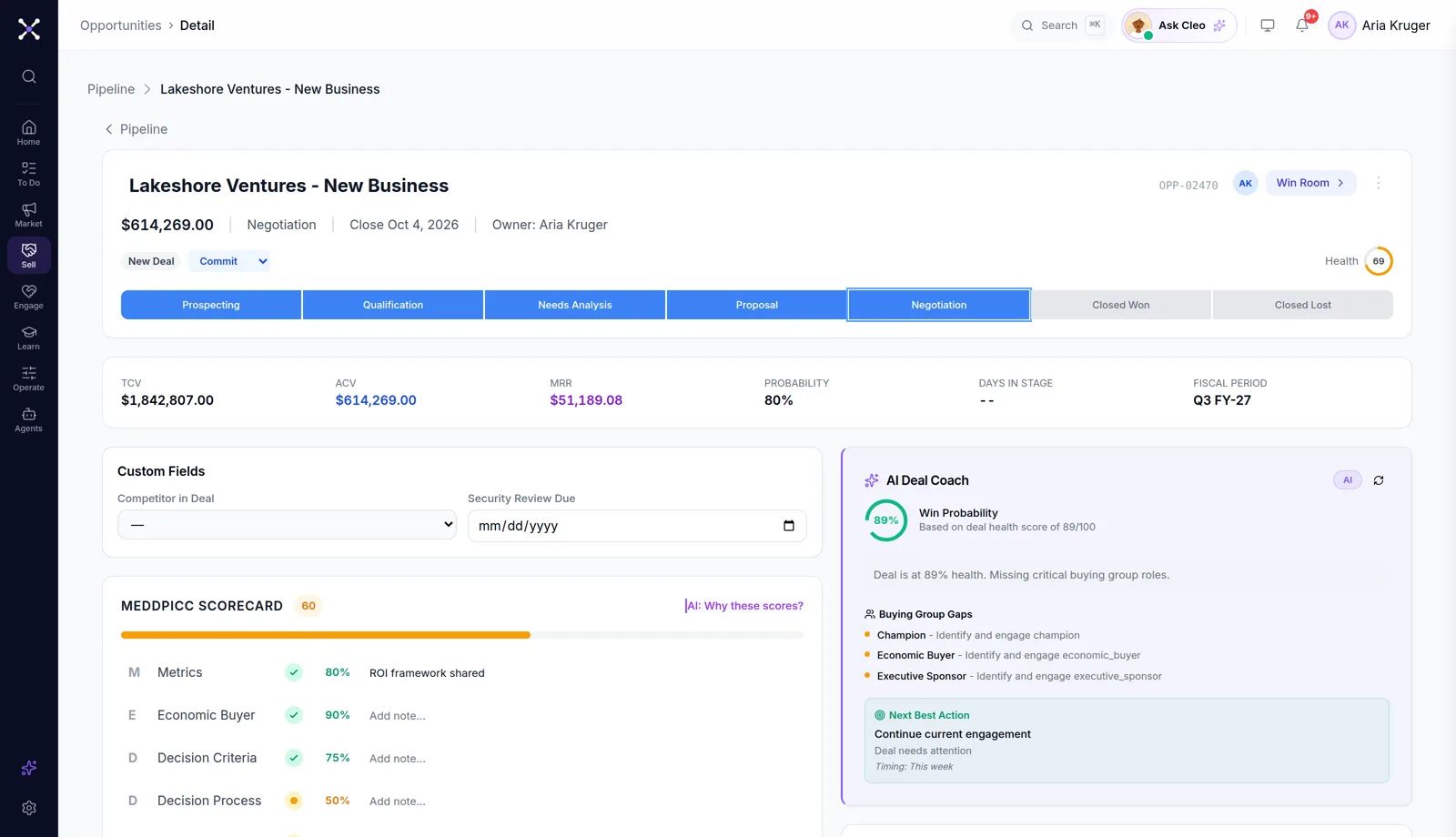
Deal management on a stack is scattered across a board in the CRM, quotes in a CPQ tool, redlines in a contract app, signatures in a third, and a close checklist in someone's head. In Muntri the deal record runs the entire arc. An AI Deal Coach keeps a live win probability and names exactly what's missing, down to the buying-group roles you haven't engaged and the next best action this week, with MEDDPICC scored right on the deal.
When it's time to quote, native CPQ configures, prices and packages the deal on the same record: tiered and volume pricing, bundles, and approval rules that route discounts for one-tap sign-off with SLAs. The quote becomes an order, the order becomes a contract with native e-signature and a signer roster, and a documents checklist tracks the MSA, security questionnaire and order form, each completed or waived with a reason. A booking gate enforces the finish: a deal cannot be marked won until the contract is e-signed and every required document is done, so "closed" always means closed. Branded deal rooms give the buyer a single link to the quote, the documents and the signature, and every signed deal flows straight into ARR, renewals and comp, because it never leaves the record.
05A forecast you can stand behind
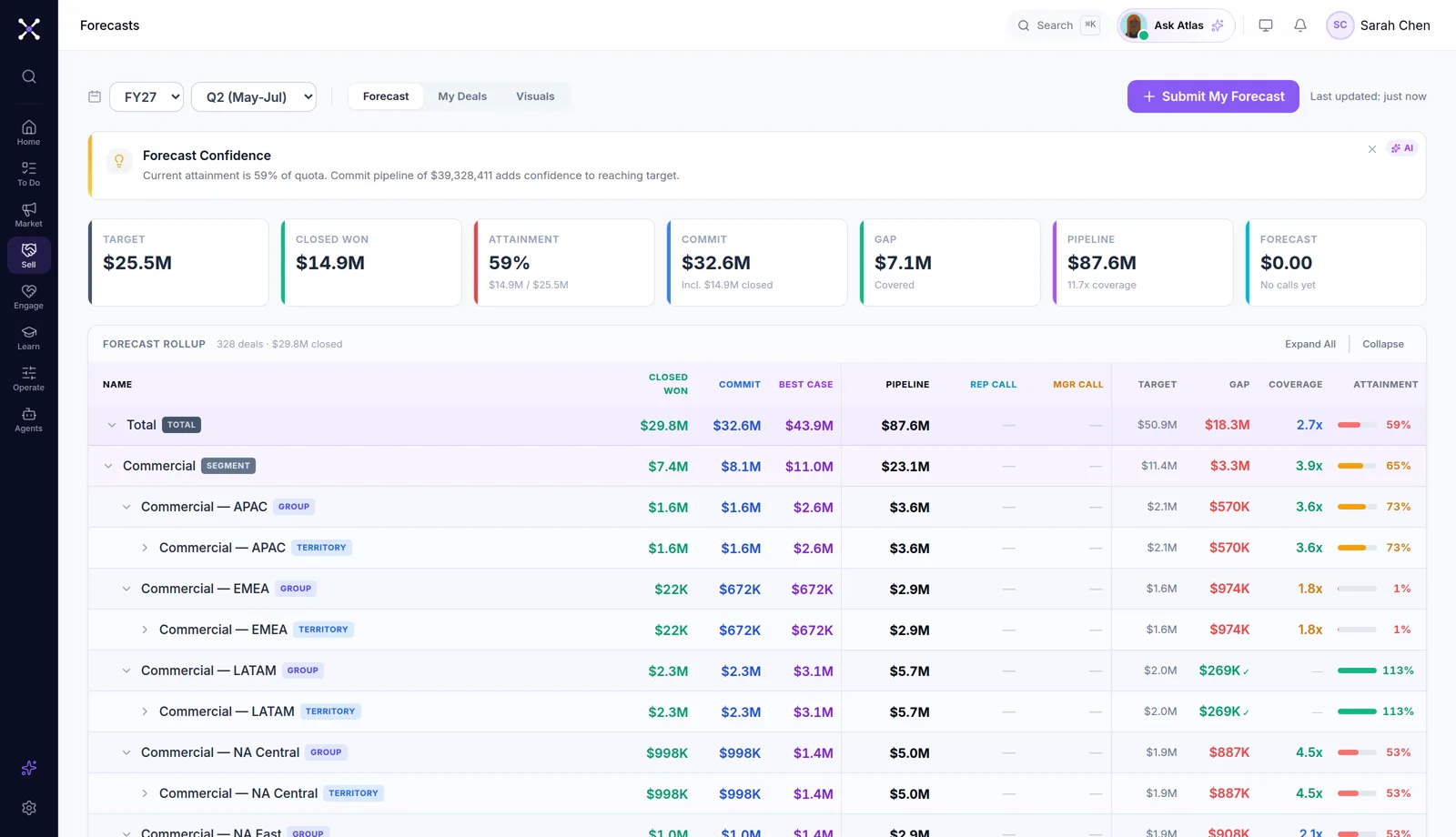
Forecasting breaks when the number is assembled by hand from tools that disagree. Muntri's forecast reads the same pipeline the reps work: calls and categories, quota versus commit versus best case, rolled up team by team with coverage and gap, and an AI-derived number sitting beside the human calls to keep them honest. Because compensation reads the same records, a rep's earnings forecast and the CRO's revenue forecast are the same math, which is precisely why reps keep their pipeline clean.
06Customer success isn't a separate product
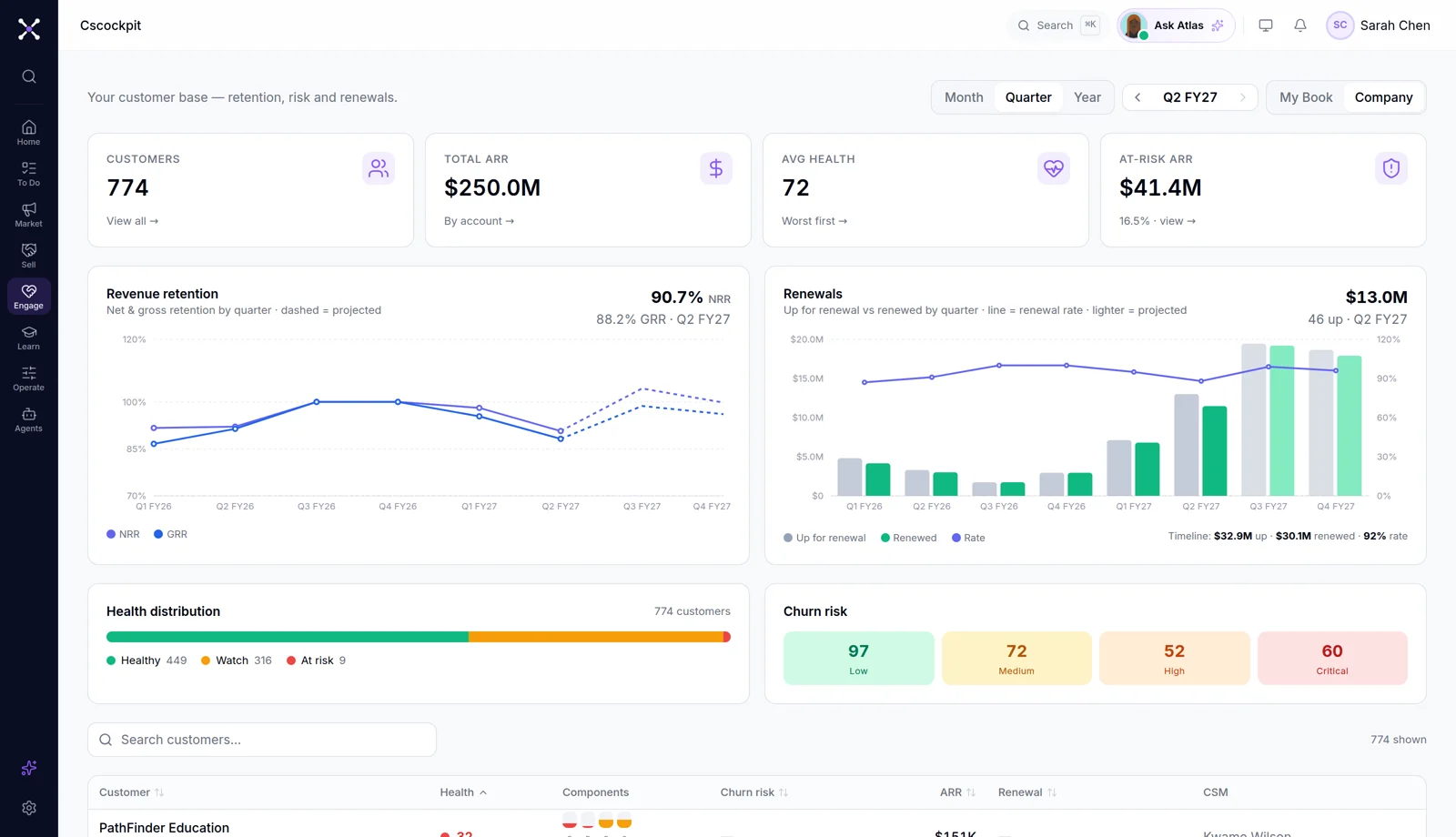
On the legacy stack, the moment a deal closes it leaves the CRM's field of vision and reappears in Gainsight: new tool, new record, new team, new integration to argue with. In Muntri the customer stays on the same record. The CS Cockpit reads a $250M book in one view: 774 customers, live NRR and GRR, health scores ranked worst first, $41.4M of at-risk ARR with names attached, and renewals tracked quarter by quarter against projection.
07Comp your reps can check, not question
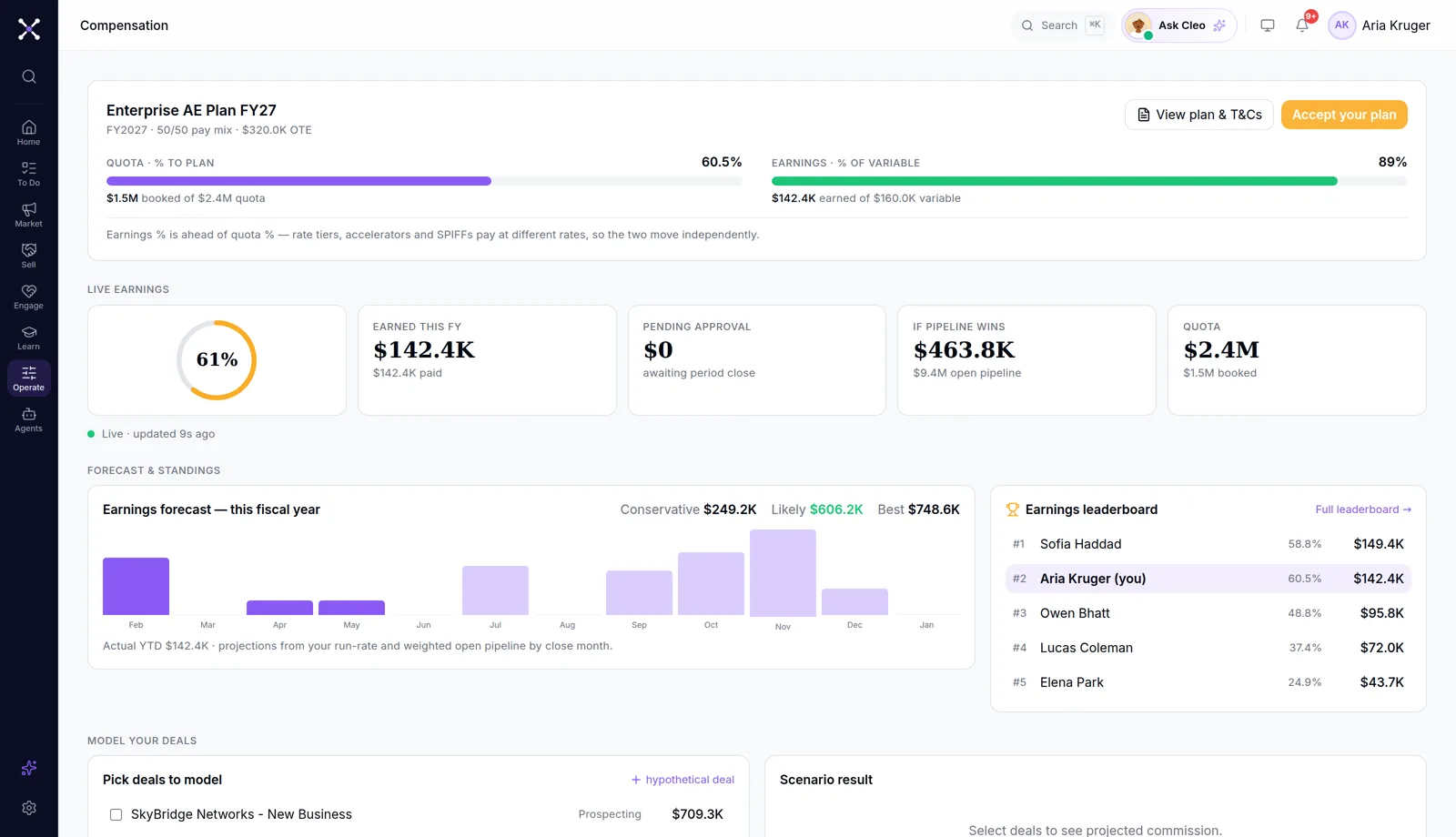
Nothing burns seller trust like a black-box commission statement, and nothing burns RevOps time like administering one in a separate comp tool. In Muntri, comp lives where the deals live. A rep opens one page and sees quota progress and earnings against variable, live to the deal. They can model "what if these three close" with real tier math, and they sign their plan electronically, pinned to the exact version of the terms it carries. Statements, disputes with SLAs, and payroll export are built in.
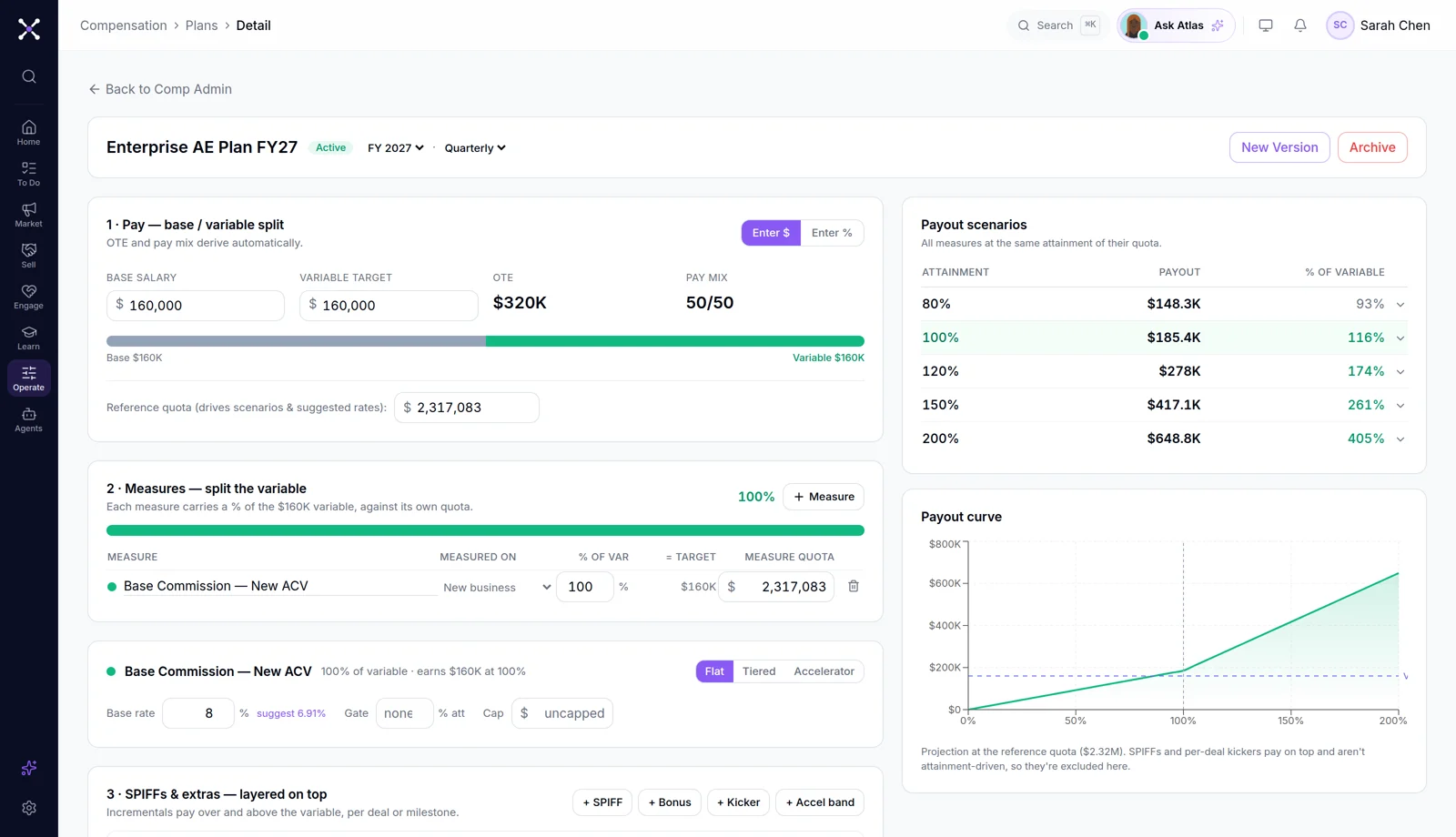
For the comp admin, plans are designed on one page: the base and variable split, the measures that divide the variable, and the rates, gates and accelerators on each. Alongside, a payout scenario table answers the question every CFO asks, what do we pay at 80%, 100%, 150%, 200%?, computed live as you design.
08Enablement that shows up in the number
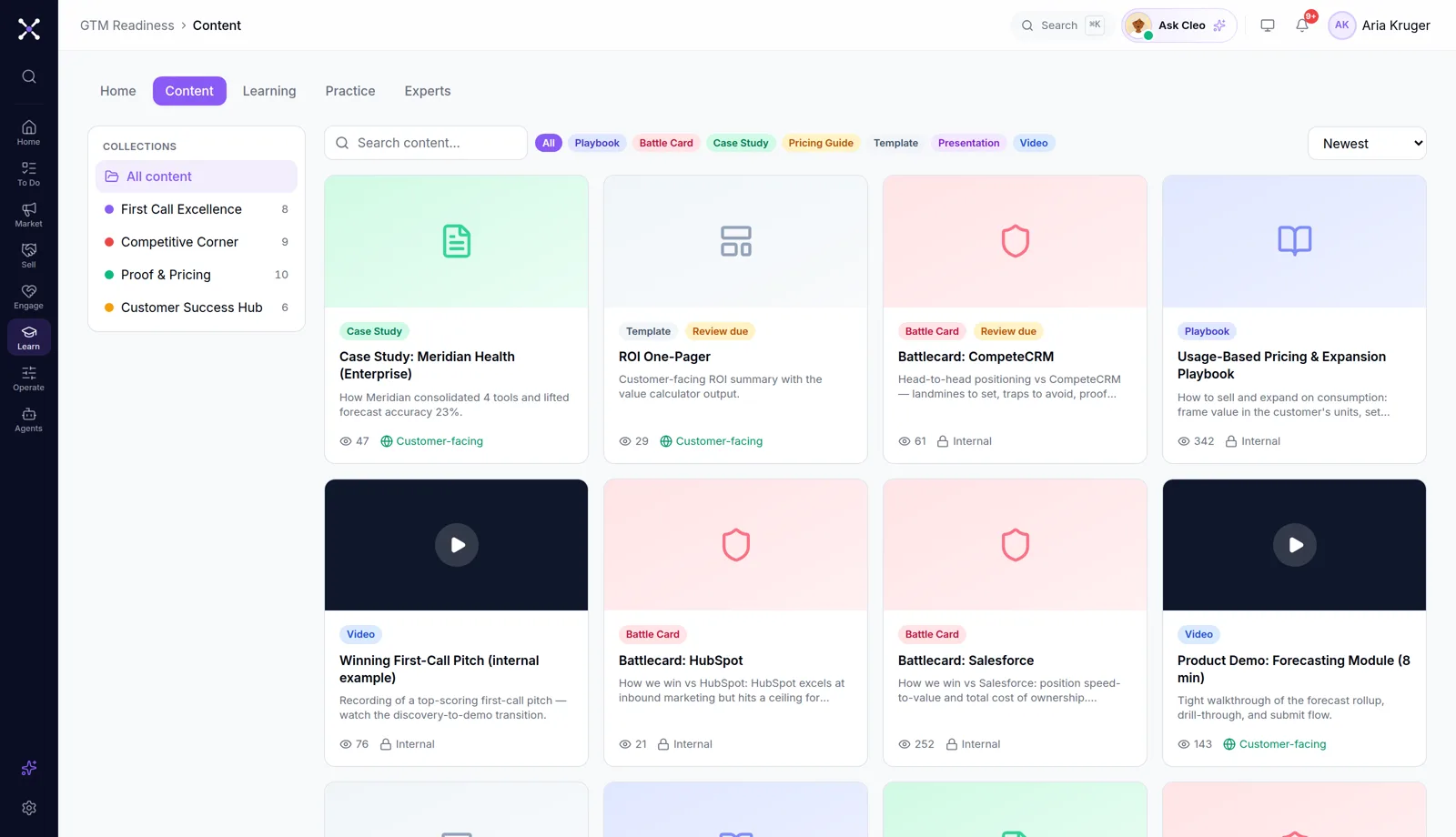
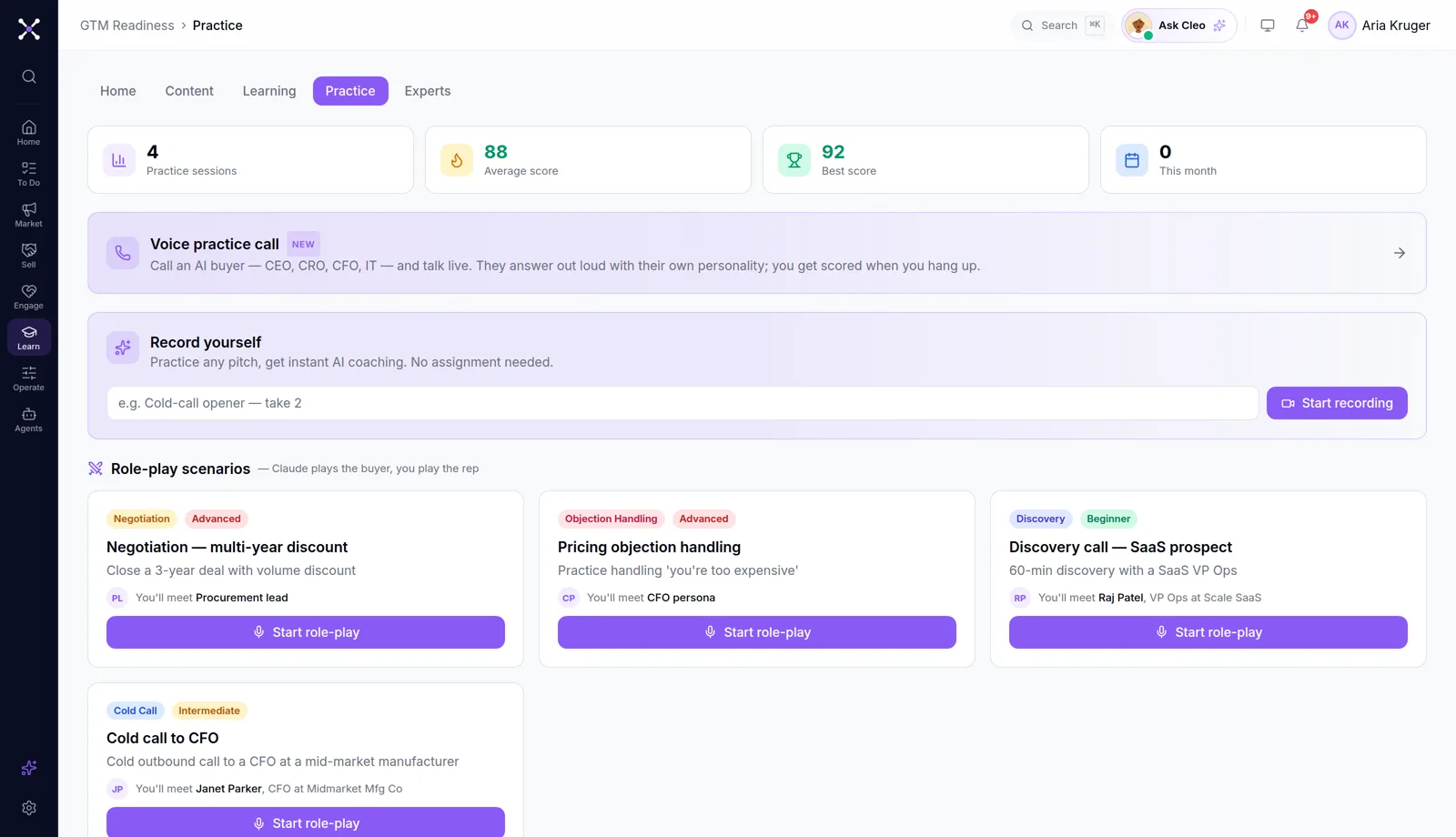
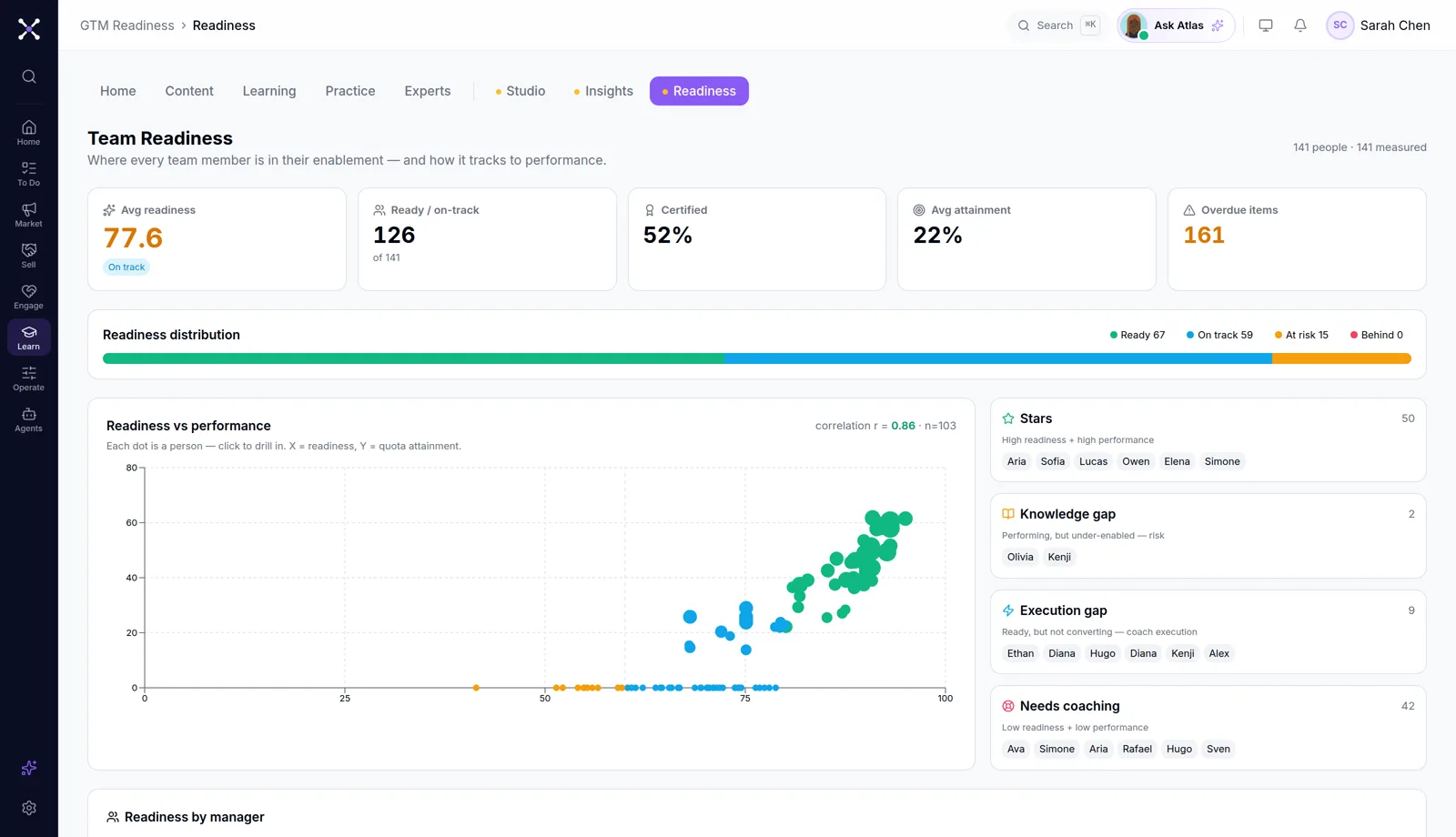
Enablement tools live in a strange exile: the training happens in Highspot or Seismic, the results happen in the CRM, and nobody can connect the two. Muntri ships the whole enablement suite inside the platform. A content library holds the battle cards, case studies, pricing guides and call recordings, organized into collections, flagged for review when stale, and shareable straight to customers. Learning paths carry onboarding sprints, product training and certifications with due dates and completion tracking. And a practice arena lets reps rehearse before it counts: role-play scenarios where AI plays the buyer, voice calls with an AI CFO or procurement lead who talks back, and record-yourself pitch reviews with instant coaching, all scored.
Because it all lives on the same record as the pipeline, readiness isn't a feeling, it's a score, and it's plotted against each person's actual quota attainment. On Verdine's 141-person team the correlation is r = 0.86. The quadrants then tell every manager what to do next: stars to keep, knowledge gaps to enable, execution gaps to coach, and who needs real attention.
09RFPs that answer themselves
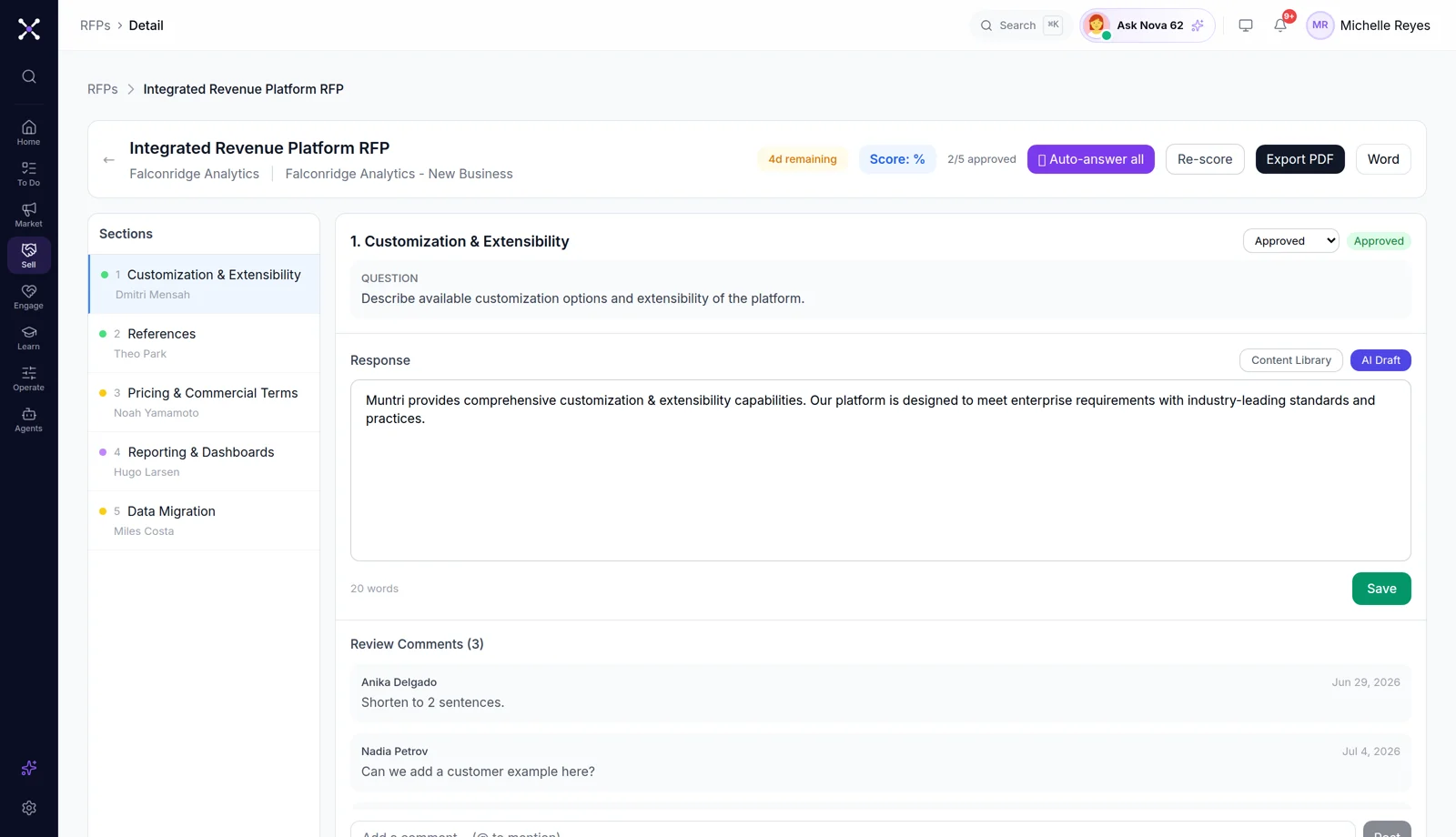
Security questionnaires and RFPs are where seller-weeks go to die, unless you buy Loopio and add another seam. Muntri ingests the buyer's actual spreadsheet, drafts every answer from your approved content library with citations, routes sections to owners with @mentions and deadlines, and exports back into the buyer's original workbook with formatting intact. SOC 2, ISO 27001, HIPAA and GDPR starter packs come included, and the library maintains itself: winning answers get promoted, stale ones get flagged.
10AI woven through, on your terms
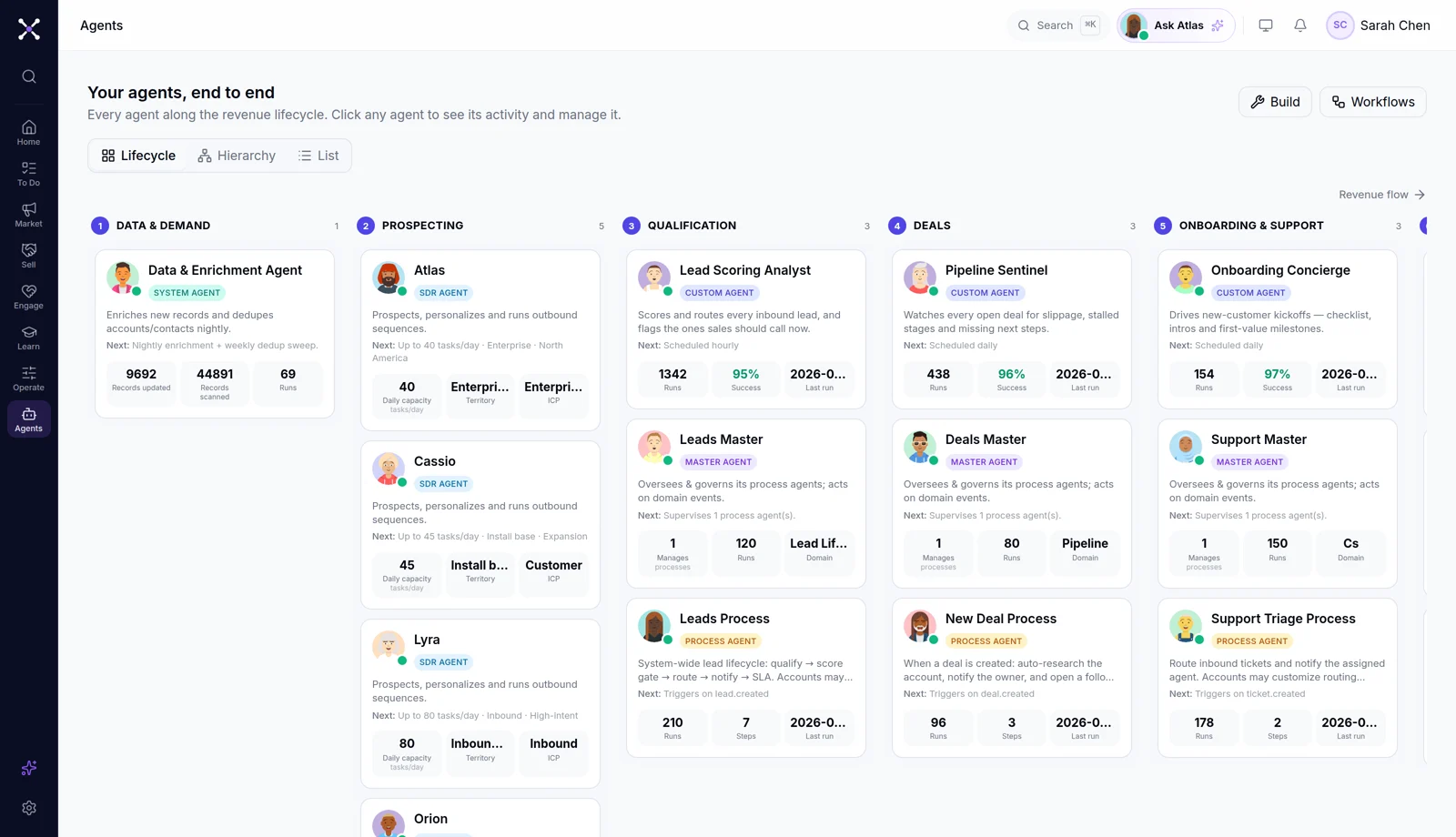
Every vendor now sells "AI". The question is where it sits. Bolted on top, it's a chat window and an upsell SKU. Muntri was built with AI-first principles: AI workflows, AI agents for every account and user, building and using context throughout the journey. Every core process is an agent, so when something is being done, user agents work with the process and account agents, with full transparency, guardrails, and auditability. Each agent can be directed to be on manual only, co-pilot (ask first before action) or autonomous. You are in control.
11Administration without the admin army
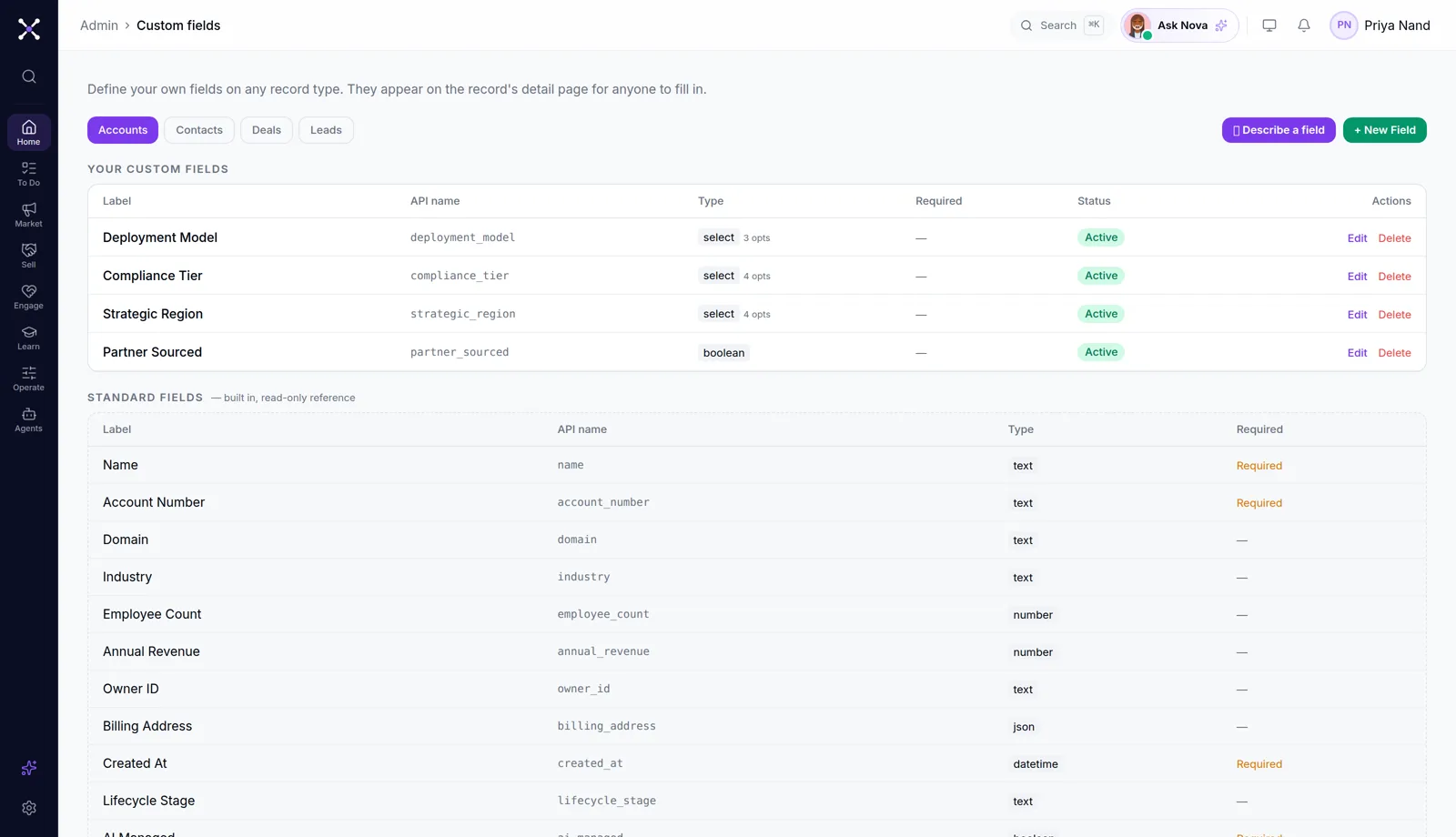
Every tool in the legacy stack ships its own admin console, and the biggest one ships an entire certification industry. Muntri's bet is that a revenue platform should be run by the revenue team. Custom fields and custom objects are built in clicks, with the standard schema shown right beside them so you extend instead of duplicate. Describe the field you want in plain language and AI drafts the configuration. Roles are a permission matrix, not a consulting engagement. Saved views, report builders, workflow automation and sample data are all self-serve, and every change lands in the audit log.
12Meet the platform where you already are
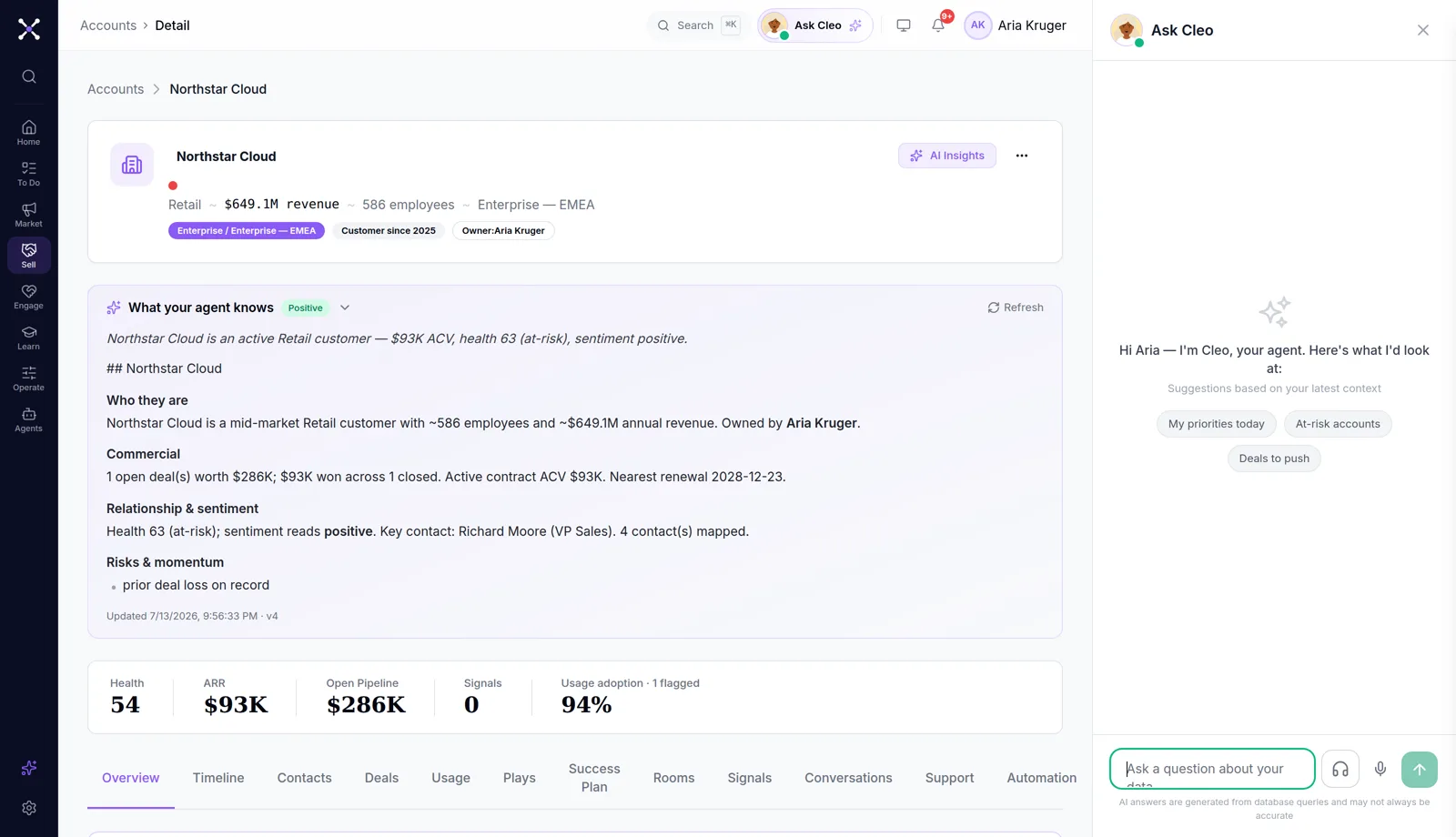
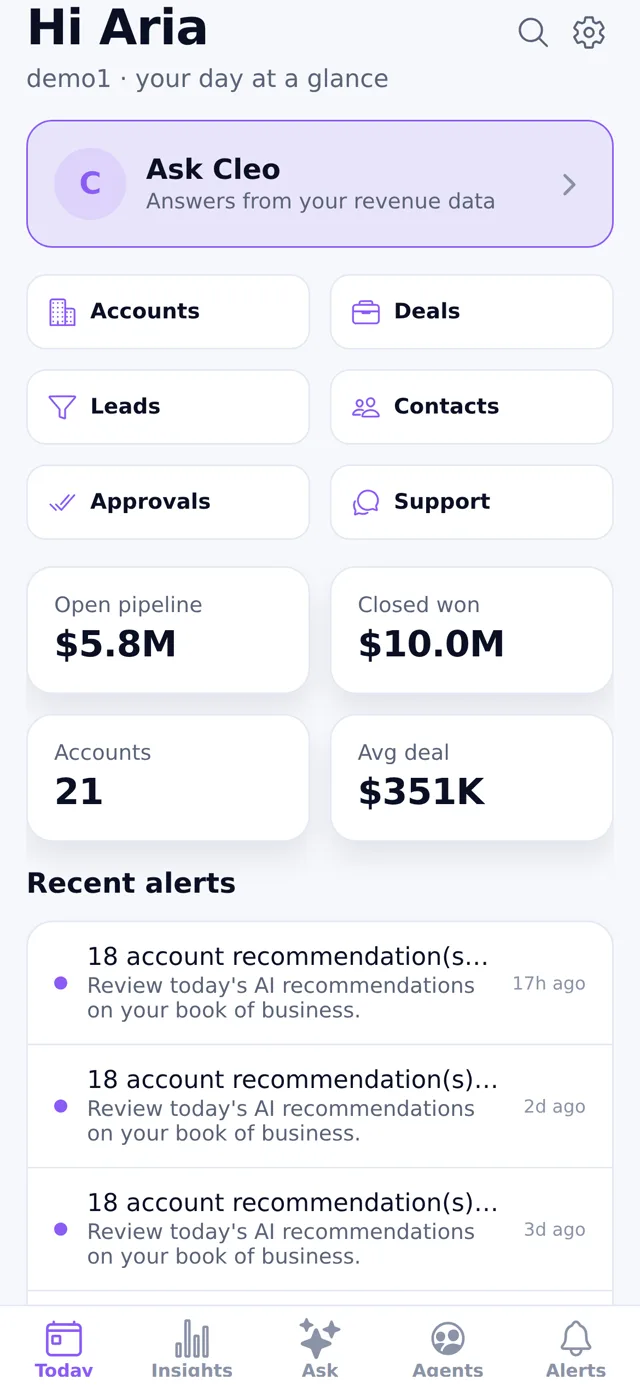
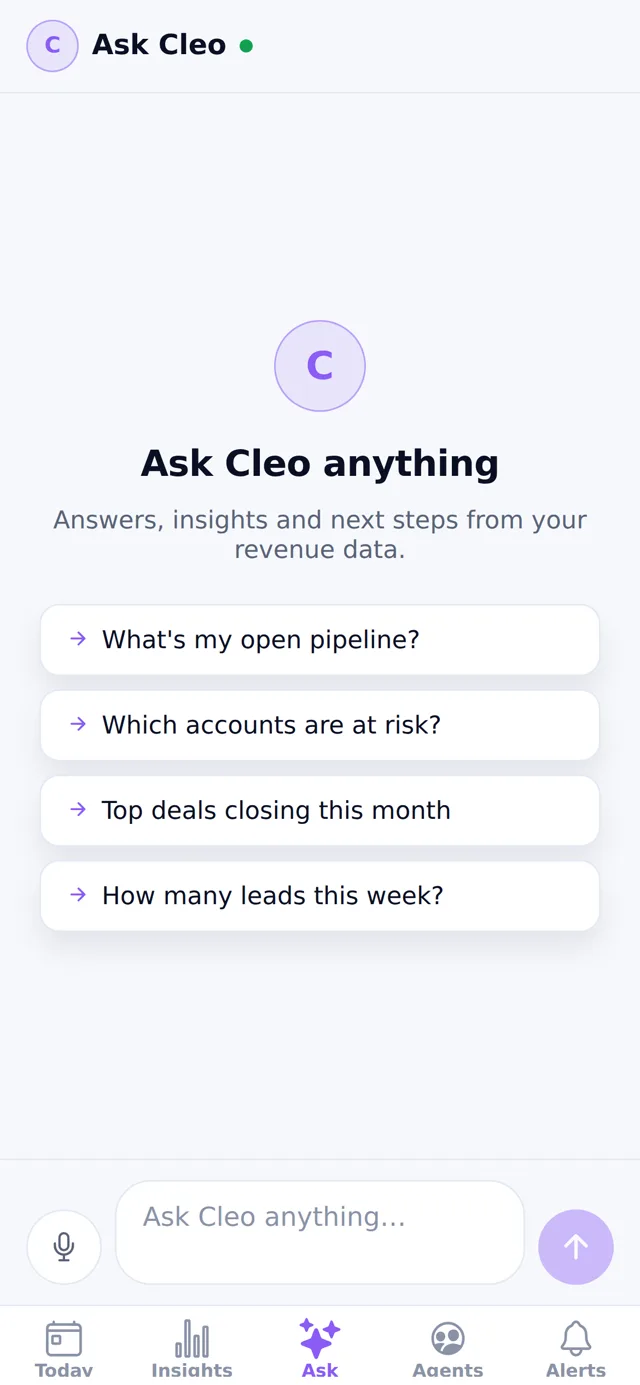
One record only matters if everyone can reach it. In the browser, every user and every account has a named agent docked on-screen: ask in plain language, speak instead of typing, and have answers read back. The iOS app carries the same assistant, secured by Face ID, with push alerts that deep-link straight to the record. Notifications land in Slack. Email works from your inbox and lands on the record as a full trail. And everything the UI can do, the API can do: scoped keys, webhooks and connectors, so your systems engage the same record your people do.
13The math your CFO will do anyway
Consolidation isn't just cleaner. It's dramatically cheaper, because per-seat pricing multiplied across a stack is the most expensive way to buy software. Typical public list pricing for a 50-person revenue team looks like this:
| Capability | The stack way | Typical cost / yr* | In Muntri |
|---|---|---|---|
| CRM & pipeline | Salesforce or HubSpot | $100K to $200K | Included |
| Conversation intelligence | Gong | $70K to $120K | Included |
| Customer success | Gainsight | $60K to $100K | Included |
| Engagement / cadences | Outreach / Salesloft | $50K to $80K | Included |
| Quoting, CPQ & contracts | DealHub / PandaDoc / DocuSign | $20K to $50K | Included |
| Commissions | CaptivateIQ / Everstage | $30K to $60K | Included |
| RFP / questionnaires | Loopio / Responsive | $20K to $40K | Included |
| Enablement | Highspot / Seismic | $30K to $60K | Included |
| AI features | Per-seat add-on SKUs | $25K to $75K | Your models, token cost |
| Total | 9 contracts, 9 admin surfaces | $405K to $785K | From $599/mo flat |
*Directional, based on publicly reported list-price ranges for a ~50-seat team, annualized. Your quotes will vary; that is rather the point of quotes.
Muntri is flat-rate per workspace: $599 to $4,999 a month depending on tier, with unlimited seats and AI at vendor token cost, no markup. For most teams the platform pays for itself against any single line of that table, before counting the integration and admin time you stop burning.
14What this means if you run revenue
- One number, finally. When the board asks what changed, Pulse is the answer: sources to renewals, with attribution, live. No stitching, no "let me check with ops."
- Modern demand shows up. Buyers increasingly arrive from AI engines. Muntri measures AEO as a first-class channel while legacy CRMs are still adding fields for it.
- Sellers sell more. Comp they trust, RFPs that draft themselves, and briefings that rank their morning by dollars. The admin tax on selling time drops sharply.
- Deals close cleanly. Opportunity, CPQ, approvals, contract and e-sign all live on one deal record, and the booking gate means "won" is never wishful. What closes is what invoices.
- A forecast that holds. Commit, best case and the AI number all read the same pipeline reps actually work, and because comp reads it too, reps keep it clean.
- Retention runs on the record. CS sees what sales sold, support sees both, and the renewal never falls between tools.
- AI you actually control. Any model, per-feature routing, hard budgets, and a full audit trail. An AI workforce, not an AI surcharge.
- A number your CFO will love. One flat contract instead of eight per-seat ones.
15The path to get there
Replacing the stack sounds like a bet-the-quarter migration. It isn't, because you set the pace. There are three ways to start, and underneath they are all the same product.
Run it in parallel. Shadow mode syncs Salesforce, HubSpot or Gong read-only, so Muntri builds the live picture on your real pipeline while the incumbent stays the system of record. You evaluate every screen in this story on your own data, with nothing to rip out and nothing to explain to the board yet. When the team is living in Muntri anyway, you flip it to primary on your timeline, not a vendor's.
Adopt one unit at a time. You don't have to buy the platform to get value from a piece of it. Start with a single module as its own product: the AI Practice Arena at a flat $299 a month, RFx that answers its first questionnaire free, or comp your reps can finally check. Each one stands alone, prices flat, and quietly accrues the data that lights up the next: every practice call, every signed deal, every synced account makes the module beside it an unlock rather than a new purchase. Land where the pain is loudest, expand as the trust builds.
Or move everything. For teams already tired of eight contracts, the white-glove import pulls Salesforce, HubSpot, Pipedrive or a CSV into one record, and you retire the old renewals as they come up. One cutover, one system, one number.
Most teams start in one of the first two and end in the third. The point is that the direction is yours: one workspace, adopted in parallel, one unit at a time, or all at once.